Wednesday, December 18, 2013

December Observations on Life in Abidjan

Language in Cote d’Ivoire – Language stuff is very interesting here.  I think it might be the best place in the world to learn French.  Unlike most places in Africa, French is a native language for almost everyone.  And unlike France, Belgium or Quebec, people speak very little English, so you don’t even have to battle over which language to use. 

In public life, Abidjan is almost exclusively French speaking.  Cote d’Ivoire has ethnic languages, but there are so many ethnicities with so many languages that Abidjan residents speak almost exclusively French with one another.  Even in remote regions, French is the language of school instruction, so everyone is a native speaker, or close enough.  The Burkinabe and Guinean immigrants don’t always speak as well, and their accents are thick, but they are from Francophone countries, so they still speak better than me. 

This hodgepodge of French dialects makes for a forgiving learning environment.  There are so many accents and dialects that people just assume that my poor French is an odd dialect.  I ask taxi drivers to guess where I’m from and they always guess France. 

And very few people speak English.  Not even my highly educated colleagues.  They clearly studied it in school and sometimes hear it in movies, but they are not accustomed to using it in daily life.  And the cab drivers and vendors don’t speak at all, so there’s not even the temptation to use it in daily interactions.

(Perhaps I’m not giving France enough credit as a place to learn French.  Paris is very cosmopolitan, and that’s the place where I’ve been, but surely there are rural regions in France that are more Francophone than Abidjan, yet just as non-Anglophone.) 

Abidjan Natives and Unicorns – Abidjan is a bit like Paris or Washington DC in that no one is actually from Abidjan.  Everyone is from a village in one of the regions, and they moved here for work.  Even if they were born here, their family is from the village and they go back for festivals. 

The Lecture Circuit – This past Saturday, I gave a presentation for a class of high school students on The Role of Girls in the Classroom in the U.S.  It was in English at CUSA (Connect USA), an English language institute run by an Ivorian friend here in Abidjan. 

I’m a nervous public speaker, but it turned out to be a lot of fun.  I asked the girls whether they wanted to have careers and why.  This being a classroom of upper class kids, all of them wanted careers, with the main reason being that they wanted to be “independent” of their husbands so that their husbands can’t tell them what to do.  I then asked the girls whether they would like to earn more money than their husbands, to which they replied that yes, that would be great. 

I then asked the boys whether they would be okay with their wives earning more than them.  Absolutely not, they all said.  “If the wife earns more than her husband, he cannot tell her what to do,” one of the boys informed me.  I then asked how many of the boys agreed with the following statement: “My wife should have to do what I say, but I should not have to do what my wife says.”  Nearly all agreed.  This set us up for the big reveal, of course, where I told them that my wife earns more money than me, which of course brought gasps of shock. 


The students were really fun.  They spoke surprisingly good English (for Cote d’Ivoire) and they seemed to enjoy the classroom debate – I haven’t been to a regular class here, but I assume that school is shaped by the French model of sitting like statues while a professor drones on about theory.  They were also very well behaved.  The discussion was spirited, and many were eager to speak, but nobody spoke without being called upon, although they did wave their hands a bit wildly and call “Sir! Sir! Sir!” in hopes of being called upon. 

Monday, December 9, 2013

More Observations from Yamoussoukro


More Observations from the Atelier National de réflexions sur une Strategie Nationale de Financement Basé sur la Performance en Cote d'Ivoire in Yamoussoukro. 
  • On Friday, the last full day of the workshop in Yamoussoukro, I was nominated “president” of my workshop group.  For context, at the beginning of every daily workshop, each group nominates a president.  The president's job is to call on people to speak and to keep the discussion moving and the work on schedule.  My nomination was out of politeness, not out of any sense of Africans deferring to Americans; I had been pretty quiet the previous day, and I believe they were trying to be inclusive. 
  • Being president was a very stressful, very memorable experience.  Everyone is quite formal; they call you "president" or "monsieur/madame le/la president" throughout the time that one is president.  Things quickly descended into chaos though.  At the best of times, it takes a very strong leader to keep control of these group-writing sessions, and my linguistic and cultural ignorance were huge obstacles.  Even if I spoke perfect French, the cultural unknowns made effective leadership very tricky (Should everyone be allowed to express their viewpoint on every issue? Am I allowed to interrupt government officials 30 years my elder?).  And my lack of Ivorian institutional expertise left me completely unable to contribute on several important points (there was a long debate about exactly which Ministry of Health offices should be involved in regulating the “purchasing agent”).  And my French is far from perfect.  The upshot was that I completely lost control of the meeting.  Everyone ended up arguing about tiny, esoteric points for the first four hours.  The senior group member kept on giving me reproachful looks and he publicly "exhorted" me to take better control of the meeting, but it was not to be.  I implored the group to move forward, but was completely powerless to move things forward as I might have been able to do in English.  Finally, with 45 minutes until we were expected to present to the wider conference, the group seemed to confront the reality of our time constraints.  We threw together the final 75% of the work in broad, panicked brushstrokes during that last half hour and presented an adequate enough final product in the restitution session. 
  •  In fairness to my Ivorian colleagues, this was about the same as most group work projects I’ve experienced.  At Booz Allen, we spent the first week writing scripts via group and it followed the exact same pattern.  We would spend an entire morning arguing about comma placement in Script #1, and then write the last four scripts in an hour.  The work group in Yamoussoukro was a bit panicked at the end, but probably not memorably so for most of the group members. 
  • Participating in workshops in a different language is fun because it allows you to zoom out and appreciate the quirks of human nature.  When you can’t fully follow the semantic thread of the conversation, you pick up on body language: adults roll their eyes or refuse to make eye contact with a person who is disagreeing with them.  They spend 90 minutes on facebook, completely oblivious of the conversation, but then their laptop battery runs out, so they join the conversation and then immediately get so fixated on a point that they won’t let the group move past it for half an hour. 
  • The drive home from Yamoussoukro was a fascinating cultural experience.  I rode back with four of my colleagues at DPPS.  Our driver, Touré, was the most junior member of the team.  He was very offended when I tried to put on a seatbelt, assuring me that he was a terrific driver. 
  • The freeway is one-lane, so passing other cars is a necessity.  Our driver was a decent enough driver, and not overly aggressive, or at least not overly aggressive compared to the Abidjanais cab drivers.  We passed cars regularly, and for the most part without great danger.  But I dozed off after a couple of hours, and I woke up to screams and found our car accelerating towards an oncoming pickup truck while another pickup truck blocked our path back to the safety of our lane.  We survived that, but then, half an hour from Abidjan, the driver lost concentration for a bit and almost swerved off the road.  My supervisor, woke up with a start, and immediately yelled at the driver for his reckless driving.  The rest of the car chimed in, and the driver got so offended that he pulled off the side of the freeway and stormed off to smoke a cigarette to calm himself down.  He eventually returned, having apparently resolved to enact some revenge.  We spent the next 90 minutes behind a semi-truck that was traveling 15 miles per hour and spewing horrible black smoke.  As further punishment, the driver turned off the car radio and we sat in silence (although he did put in earphones for himself to listen to music from his smart phone).  The driver’s tantrum didn’t even have the desired effect, as my supervisor had lapsed into a deep slumber in the passenger seat.    
  • After the long journey crammed into the middle of the back seat, I was pretty eager to get home, and I even offered to take a cab so that the driver wouldn’t have to drive me all the way back.  He wouldn’t hear of it though and insisted on taking everyone back to their own houses.  We started by dropping off a coworker whose house was situated on a dirt road on the outskirts of the far opposite side of our sprawling capital.  He insisted that we all come in for a beer, and the group, somehow warmly reconciled by now, happily accepted, and we chattered happily about the tranquility of the remote location.  We then headed to my place on the other side of Abidjan, where I couldn’t help but invite everyone in for a second beer. 
  • It was a very long day and a long week, but very good for my French and for my understanding of the Ivorian health sector.  So long as I concentrate, I now have little trouble following the lectures or group discussions at the workshop.  I learned a good amount about both the structure and implementation of our Performance-Based Financing program, as well as institutional insights that are never written into formal government documents.  I’m still not at a place where I can understand my Ivorian colleagues when they laugh and banter in a personal setting, but I’m improving and, on good days, I feel optimistic that I will get there. 


Friday, December 6, 2013

Yamoussoukro Observations

Observations from Yamoussoukro - December 4-6, 2013 
  • On Wednesday morning, I took a bus from Abidjan from Yamoussoukro, the bizarre nominal capital.  It was the first time I’ve taken a bus in Cote d’Ivoire and I was pleasantly surprised at how easy it all was.  The ticketing office was quite professional, with standard prices and official printed tickets.  There was a terminal with benches, a television set and no panhandlers.  The bus itself was mainly middle class.  Several people in my vicinity pulled out books during the trip.  It was a bit crowded (there were about 80 people squeezed into a normal sized travel bus), but clean and secure.  Out of 80 travelers, I was one of two Westerners and there was an Indian as well. 
  • The bus had a couple of television sets that played an Ivorian sitcom throughout the trip.  The volume was a bit low and I had trouble understanding the dialogue, but it seemed like most of the plot centered around older men checking out or flirting with attractive younger women and then getting yelled at by their wives.  This is apparently a very relatable concept, as the passengers particularly enjoyed these scenes. 
  • I’m now in Yamoussoukro for a workshop to produce the national strategy paper for implementing “Performance-Based Financing.” 
  • We’re staying in the Hotel President, the nicest hotel in Cote d’Ivoire.  It’s lovely, the rival of any hotel I’ve stayed in.  I’d make snarky comments about the cost, but I know that we’re actually paying a very reasonable price for room, board and conference space.  And in fact it’s the World Bank paying.  And I’m quite confident that the cost is significantly less than the State Department paid for our Fulbright Pre-Departure Orientation.  Fair is fair, I guess. 
  • Once again, most documents are produced via group sessions.  Every afternoon, we divide into groups to produce some sort of document or presentation which we then present to the entire conference at the end of the day. 
  • A fun realization about group workshops: counter-intuitively, the period after lunch is often the most productive.  Post-coffee break, the pedantic among us will spend hours debating thrilling semantic issues such as whether the “government” or the “government budget” is a “source of revenue.”  Post-lunch, lethargy takes over, and the obstinate become subdued enough that the group can actually get work done. 
  • We had a moment of silence at the beginning of today's session in honor of Nelson Mandela.  
  • Google Glass with face recognition would be incredibly useful in government conferences. 

Thursday, November 21, 2013

Observations from Abidjan - November 10-21

More observations from the past couple of weeks here in Abidjan:
  • It's quite satisfying to feel more comfortable with the culture here.  When taxis or street vendors try to rip me off, it's now amusing rather than stressful.  One does start to feel a certain pride about it, and it's easy to see why the "old travelers" -- those delightful snobs who have spent significant time in developing countries -- can become so insufferable about Africa novices.  
  • Learning a language -- particularly French -- as an adult is such a long road.   I often feel like I've stagnated or that my progress is so slow that I'll never achieve true fluency.  I've gotten to the point where small talk and business interactions are no problem at all.  But the nuances still escape me.  Being able to hold a conversation in French is one thing; being witty or interesting or fun at a party in French is quite another.  These are subtle and difficult skills that one spends a lifetime honing even in one's native language.  
  • Likewise, French at work has been a major barrier to integrating myself into my job here.  My co-workers use a lot of Ivorian slang when they speak between themselves.  I miss out on the nuances of conversation and then there are all sorts of technical terms that I don't recognize.  I spend a lot of time fake laughing at things that I don't understand, which I dislike, but it's a lesser evil than asking someone to repeat something every 15 seconds.  Also, the nuances of workplace interactions with supervisors and co-workers often require a subtlety for which my clumsy French is ill-equipped.  My French will continue to improve, and it already has improved a great deal since I've been here.  But on those days where my co-workers are laughing together and I'm grasping at straws, trying I'm trying to cling to the thread of the conversation, it can be very frustrating.  I suppose I'll never be truly fluent; just progressively less incompetent.  
  • During a recent conversation with a Belgian Congolese (white Congolese-born Belgian) businessman who has spent his entire life in Africa, he told me that the corruption here in Cote d'Ivoire is worse than it's ever been.  That's probably to be taken with a grain of salt, since he's only really been based in Abidjan for the past few years.   
  • I mentioned in a previous post that there are usually chickens running around near restaurants and fruit vendors and cell phone credit vendors.  I still don't totally understand how they keep track of which chickens belong to who.  And what if one of the chickens gets hit by a car?  The taxis make no effort to avoid the chickens, sometimes accelerating towards them.  There are also chickens that run around outside my office, cock-a-doodle-doo-ing with great gusto throughout the afternoon.  Also, you constantly see chickens crossing the road here, which never gets old.  
  • It rains here most days, but rarely for longer than 15-20 minutes.  
  • As an indication for how far off the map West Africa is, "Ivorian" is not in the lexicon of my cell phone (purchased here in Cote d'Ivoire!).  
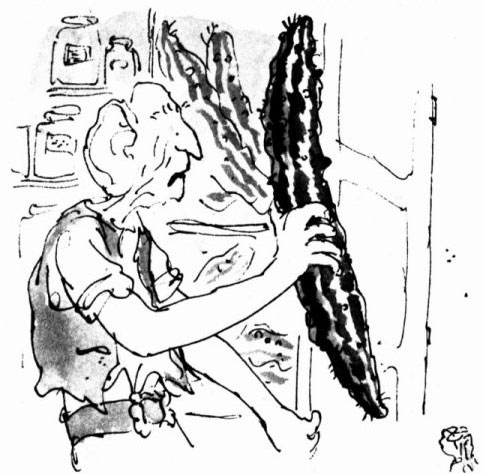
  • Sauce gumbo is a popular Ivorian sauce made from a vegetable called gumbo.  It's one of the more vegetarian friendly dishes around.  Unfortunately, I'm pretty sure that gumbo is French for snozzcumber.  
  • I'm leaving tomorrow morning for a week in San Francisco with Sheila and family and friends.  

Sunday, November 17, 2013

More on the Rights-based Approach

Feminist Out Of Water had a good post about the "rights-based approach" and I wanted to respond to a few points.  She starts by articulating several of the critiques of the rights-based approach made by Easterly and Blattman.  She counters these critiques several arguments about freedom and inequality and about the importance of consulting the poor in policymaking:
We are trying to alleviate poverty because poverty is bad. When we say poverty is bad, what we mean is that it is wrong. When we say it is wrong, what we mean is that it is unjust, unfair, unequal, and inhibits freedom. WHOA, I know, nobody likes to make this jump because now we are talking about normative things instead of meaningless things like “efficiency.” 
But I think these motivations for eliminating poverty are too broad and all-encompassing.  Eliminating poverty is not a way to redress all of the world's wrongs, just one very specific and important wrong.  In fact, I believe that defining poverty as a combination of vast and mushy concepts like injustice, inequity, inequality and lack of freedom is more likely to make the conversation "meaningless," than discussing "meaningless things like 'efficiency.'"

FOOW also devotes significant time to the argument of freedom as non-domination, an argument that I also find too broad:
The reason we humans want to alleviate poverty is because we want to increase freedom for all humans. This is because poverty undermines democratic equality and creates the ability for the wealthy to dominate and oppress (whether directly or indirectly) the poor. This means that the poor are not free if you see freedom as non-domination, which I think is a great way to understand freedom. You can be dominated by your government, through torture or imprisonment. Or, you can be dominated by a multinational corporation, that, with vast wealth and power, can take land away from you without your permission. Or, you can be dominated by your husband, if you are a victim of domestic abuse. There are many way to be dominated. The point is that people should not be so unequal in net-worth or in social standing that they can dominate each other or be dominated by each other or by institutions. It is up to us humans to design institutions that make this a reality.
FOOW says that domination undermines freedom and notes that "there are many ways to be dominated."  But I would argue that there are too many ways to be dominated for "domination" to denote a lack of freedom.  She seems to be arguing that if you live in a society where some people's land has been taken away by a multinational corporation, this does not mean that you yourself are unfree.  Or is it just the person whose land was taken away?  Or him and his neighbors?  Or him and his neighbors and everyone else whose property could possible be taken (now we're up to most of society).  This seems like an awfully big leap.  I don't believe that the existence of companies or people who do bad things shows that the people of that society are unfree.  This would mean that basically all of humanity is unfree.

She also criticizes economic arguments to policy, in which policymakers take into account silly considerations such as cost-benefit analysis.  
We cannot just say, well there is more freedom being enhanced than taken away, and call it “efficient.” Like good – bad > 0. These are human lives we are talking about not mathematical calculations. Moreover, this kind of calculation is not an abstract and morally neutral or practical or pragmatic solution, this is a clear adherence to a moral philosophy that is called utilitarianism. It is one moral philosophy among many, and has not been the premier moral philosophy for the past half-century in any other field than in economics, where efficiency as a moral concept still reigns supreme. I think it is absolutely nuts that economics claims to be value neutral while holding up utilitarianism as their moral dogma, but whatever, that is for another post.
FOOW seems to be arguing for a "do no harm approach" to policy, which I think is extreme and unrealistic.  All government policy does harm to one group or another.  Even a lack of policymaking or a delay in policymaking does harm to one group or another (see United States Congress).  In a world of limited government budgets, a right to health care or a right to a speedy trial, inherently limits the right to clean water or the right to adequate housing.  The only real conclusion that she seems to be making is that it is important to consult the poor more.

And this, for me, is the main problem with FOOW's argument.  There are lots of interesting arguments about freedom and inequality, but no real compelling argument for the rights-based approach.  She seem to be arguing for consulting the poor more, without really do not provide any arguments for why the rights-based approach does this more effectively.  


Sunday, November 10, 2013

More Abidjan Thoughts

Observations from the past few weeks here in Abidjan:
  • I had strep throat last week, and possibly malaria as well.  I'm better now, but this was a barrier to blogging the past couple of weeks.  
  • Internet USB keys here are very convenient.  You can buy a USB key and insert it into your computer whenever you need internet and it provides you with a 3G connection.  I assume that this technology exists in the U.S., but I was completely unaware of it.  
  • At the ministry of health, my direction is now pushing forward a plan to introduce "performance based financing" into the Ivorian health system.  This should be an exciting project and I imagine that it will be my core project during my time here in Cote d'Ivoire.  
  • A lot of professional documents here are written collaboratively here.  In fact, at every government conference, workshop or commission that I've been to, the goal has been to produce, via group, some sort of document.  This is in stark contrast to the U.S., where documents are composed individually and circulated for editing, and where workshops and seminars are often a waste of time.  Here, the workshop is the most important work activity; everyone comes together, works hard, and produces a policy paper collaboratively.  Still, based on what I've seen so far, I'd probably choose the U.S. model for producing collaborative work.  I do like that the Ivorian model encourages such a high level of collaboration and participation.  But it does not encourage outside research.  It's a closed universe, where a group of people will sit inside a room drafting a strategic plan without bringing in outside research, thereby failing to take advantage of the wealth of easily accessible information available via internet.  It's possible that these judgments are premature.  I have only been to a handful of workshops and commission meetings so far.  
  • Abidjan is generally pretty nice.  It is green, there is not too much garbage on the streets, there are lots of nice buildings.  Still, it's not quite as well kept as, say, NW Washington DC.  The main reminder is that my fingernails and the bottoms of my feet are usually dirty here.  Lots of dust flying around always.  
  • In general, I've been positively surprised by the level of social capital here.  To get window curtains made, you go to the store, select your curtains and then come back in a week to pick them up.  They don't demand money up front, and it is quite possible that you would never return and they would be out the cost of the materials and the labor.  When we got our furniture made, we left a sizable deposit to allow the carpenter to buy supplies, and, while he wasn't a great carpenter, he did eventually deliver all of the furniture that we had ordered at the price he had quoted.  
  • That being said, I left my cheap cell phone in a taxi last week, and the finder did not make any attempt to return it, despite text messages promising a reward.  
  • There is no daylight savings time in Cote d'Ivoire.  Which makes sense, this being so close to the equator and all.  Days are always about the same length here.  Sunrise around 6am and sunset at 6pm.  
  • There is an odd competition here among ex-pats to see who can pay the least for taxi rides.  I understand the desire to be well adapted to Ivorian culture, but I still don't really understand bragging about negotiating a particularly low fare with a cab driver.  Would you brag about how little you tipped your waiter at lunch?  Is there an ethical difference between the two?  


Sunday, October 27, 2013

Partisan narratives and why America's government fails

Keeping with my kick of reading about making government work, I liked this from Scott Sumner on why the U.S.'s government often functions so poorly:
America has two political parties:
1.  One is so anti-government that they refuse to do serious thinking about how to make government work.
2.  The other is so pro-government that they refuse to make the tough choices necessary to make government work.